Granada to Madrid Train: Routes, Times & Fares
Since June 2019, Granada has had a direct high-speed line into Madrid — climbing out past the Sierra Nevada mountains, crossing Andalusia's olive groves, then running flat across La Mancha to arrive beneath Atocha's glass-roofed botanical garden. Getting to Granada by train has never been easier: it's one of the newest corridors on Spain's AVE network, and also one of the most scenic, bookending a roughly 3.5-hour direct ride between two of the country's most visited cities. Here's how Renfe's AVE, Alvia and Avant services actually compare, and everything else worth knowing before you book.
Search Granada to Madrid Train Tickets
Compare real-time fares and ticket prices across operators, then book securely through our search partner.
How to Buy Granada to Madrid Train Tickets
Booking ahead of time almost always beats buying on the day, especially on the lower-cost operators.
Booking Online in Advance
Most travellers book online with a card, comparing departure times and prices across operators before choosing a seat. Fares typically open around 60 to 90 days ahead of travel and climb steadily as each train fills up, so booking in advance is the simplest way to find cheap train tickets and control cost.
At the Station Ticket Office
Both Granada and Madrid Puerta de Atocha–Almudena Grandes have staffed ticket offices and self-service machines, useful for last-minute changes or if you'd rather not book online. Expect higher prices than an advance online fare, and possible queues at busy travel times.
Groups, Families and Passengers with Reduced Mobility
Children and larger groups often qualify for discounted fares, and every operator offers reduced-mobility assistance if you contact them ahead of travel — worth arranging a day or two before your journey so staff can meet you at the platform.
The Granada to Madrid Train Route
The high-speed line runs from Granada north through Antequera and past Córdoba before joining the Madrid–Seville corridor on dedicated high-speed tracks, giving AVE and Alvia direct connections for a fast, near-straight run into the capital.
What the Granada to Madrid Train Ride Looks Like
Granada was the last major Andalusian capital to get high-speed rail — the Antequera–Granada spur only opened to passengers on 26 June 2019, finally threading the city into Spain's AVE network via the Córdoba–Málaga line. That recent history shows in the ride itself: the most dramatic stretch comes right at the journey start, and it's a genuinely different landscape from end to end, which is part of what makes this particular train journey worth savouring rather than sleeping through.
The Train Journey, Stop by Stop
- Climbing out of the Vega de Granada with the snow-capped Sierra Nevada visible to the east — the single best photo opportunity of the whole journey.
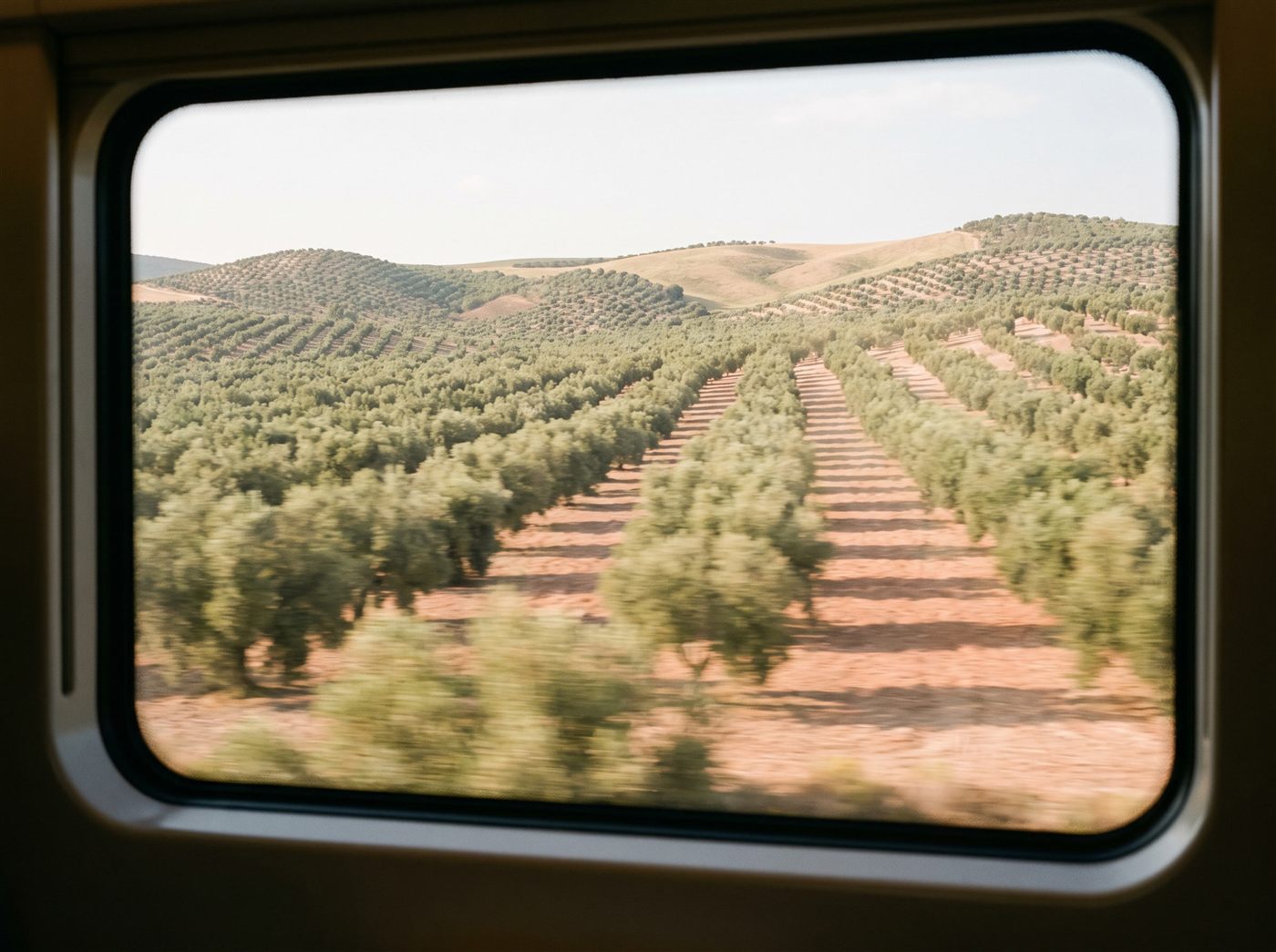
- Rolling Andalusian countryside and centuries-old olive groves through the Antequera corridor, one grove blending into the next for several minutes at speed.
- A brief join with the Córdoba–Málaga high-speed line before turning north toward Madrid, where the train reaches its full cruising speed.
- Andalusia giving way to the vast, flat plains of La Mancha as the train picks up speed, a landscape of windmills and vineyards familiar from Cervantes.
- Arrival beneath Atocha's original 19th-century glass-and-iron train shed, a striking contrast to the modern high-speed platforms just beyond it.
History of the Granada–Madrid Rail Line
Granada's train station opened in 1874, but for well over a century the journey to Madrid meant a slow, winding conventional line that could take five hours or more. Spain built out its AVE high-speed network from Madrid outward from the late 1980s onward, reaching Seville, Barcelona, Málaga and Córdoba over the following decades — while Granada, cut off by the Sierra Nevada and Betic mountain ranges, was left waiting for its own connection to the national high-speed grid.
The Antequera Spur Begins
The missing piece was a new 122 km high-speed spur connecting Granada to the existing Antequera–Málaga line. Construction ran for years through difficult mountain terrain, tunnelling and bridging a route that conventional rail had always avoided.
Last of the Andalusian Capitals
Granada was the last major Andalusian capital city to receive AVE service, arriving well after Seville, Córdoba and Málaga had already been connected for years. The line opened to passengers on 26 June 2019, cutting the previous journey time by roughly half.
Renfe Trains Today
Renfe still runs this route today, much as it has done since the Antequera spur opened, using AVE for the fastest departures, Alvia for a similar direct alternative, and Avant on itineraries that include a change. New trains and rolling stock upgrades over the years have helped Renfe keep a reputation for good service between Madrid and Granada. Spain's 2021 rail liberalization opened the wider high-speed network to private operators like Ouigo and iryo, though on the Granada corridor specifically, Renfe's own trains remain the services actually running today.
AVE vs Alvia vs Avant: Choosing Your Granada–Madrid Train
Renfe runs this route using three train types, each with a different balance of speed, directness and price. You won't book directly on any single train type here — use the search widget above to compare live times and fares across all three in one place.
| Train type | Journey time | Change required | Fare range* | Best for |
|---|---|---|---|---|
| AVE | 3h27m–4h28m | Usually direct | $76–$144 | Fastest, most frequent departures |
| Alvia | ~3h34m | Direct | ~$166 | Alternative direct departure |
| Avant (connecting) | 4h50m–5h26m | 1 change | $80–$211 | Fills schedule gaps — not always cheaper |
*From a one-day fare snapshot on this route — exact prices and times vary by date and demand, so always check live pricing before travelling.
AVE Trains
Spain's flagship high-speed train and the fastest, most frequent way to cover this route. AVE Renfe trains offer different classes to suit every budget: Turista (standard class, also sold as economy class), Turista Plus, and Preferente, a premium fare tier with first-class-style comfort. Most AVE departures run direct, though one connecting itinerary can also be booked under the AVE name — check the specific journey before booking if a direct ride matters to you.
Alvia
Renfe's other direct high-speed option on this route, built on variable-gauge rolling stock that can also run on conventional track elsewhere in Spain. On the timetable it typically fills a useful midday departure slot alongside the AVE services.
Avant (connecting)
Used on itineraries where you'll change trains once, usually paired with another train for the rest of the journey. Depending on the layover, connections can extend total travel time to well over 4 hours — around 4h50m to 5h26m in total on this route — and, based on live pricing, aren't reliably cheaper than a direct AVE fare, so it's worth comparing the actual price and time before choosing one.
Granada to Madrid Train Schedule and Frequency
Renfe runs around 6 to 8 departures a day between Granada and Madrid, mixing direct AVE and Alvia trains with Avant connections — from the first train in the early morning to the last train in the evening. Exact train times shift by day and season, so treat the figures below as a planning guide rather than a live timetable.
Fastest Train: AVE
3h27m–4h28mUsually direct, fewest stops — the fastest and most frequent way to cover the route.
Alvia
~3h34mDirect, similar timing to AVE, typically filling a midday departure slot.
Avant (connecting)
4h50m–5h26mInvolves one change and takes noticeably longer — worth comparing the price before booking, since it isn't always cheaper.
Onboard Services on the Granada to Madrid Train
Comfort and services vary by train type and class, so it's worth knowing what's typically included before you buy.
Seats and Class
AVE typically offers three seat classes (Turista, Turista Plus and Preferente) with reclining, airline-style seats, a table, power outlets at every row and included seat reservation; some AVE trains also set aside a designated quiet zone for passengers who prefer a calmer carriage. Alvia is broadly similar in comfort. All Renfe high-speed trains on this route run with air conditioning, even during the hottest summer months, and toilets are available on every train, including Avant. AVE trains themselves are capable of speeds up to 310 km/h on the fastest stretches of track.
Food and Drinks
AVE and Alvia usually have a café car or trolley with hot and cold drinks and snacks, and Preferente-class tickets can include at-seat service with a light meal. Many AVE and Alvia trains also offer free wifi and an onboard entertainment portal with films and TV series to stream during the journey. Onboard service on a connecting Avant leg tends to be simpler, and some extras may come at an additional cost — check what's included for that specific train when booking.
Luggage, Pets and Bikes
Most AVE and Alvia fares include one piece of hand luggage plus a larger bag. If your itinerary includes an Avant connection, double-check that leg's baggage allowance. Small pets in a carrier are generally allowed for a small additional fee, guide dogs travel free, and folded bikes are usually accepted as luggage.
Granada and Madrid Train Stations
 GRDeparture
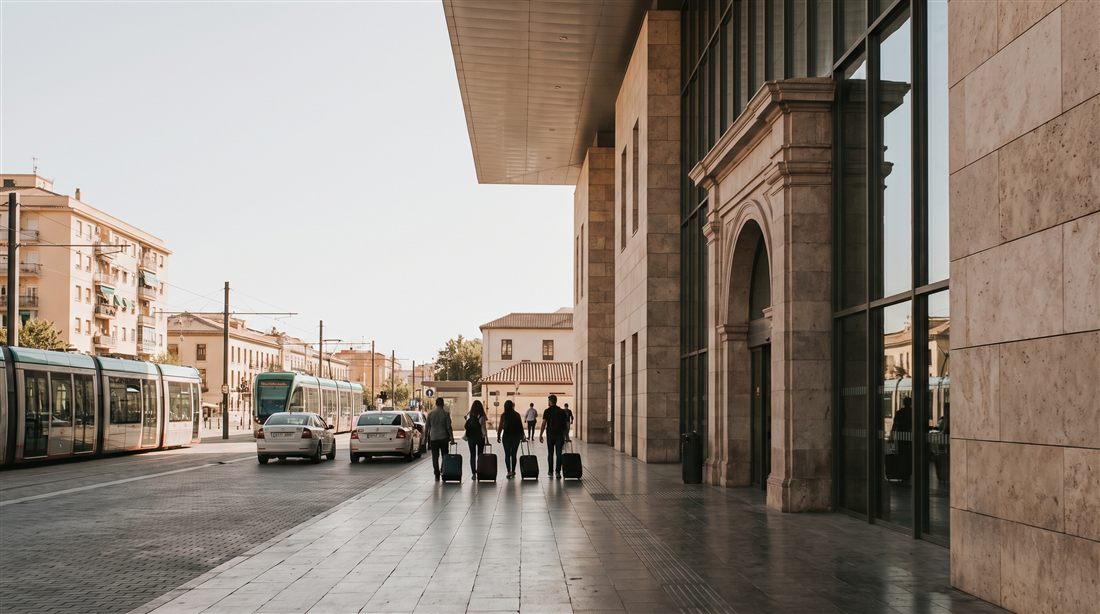
Granada Train Station
Opened in 1874 and modernized to handle AVE and other high-speed services once the Antequera spur connected the city in 2019. It sits a short taxi or tram ride from the historic centre and the Alhambra, with a small concourse of cafés and shops for the wait before boarding.
 AJJunction
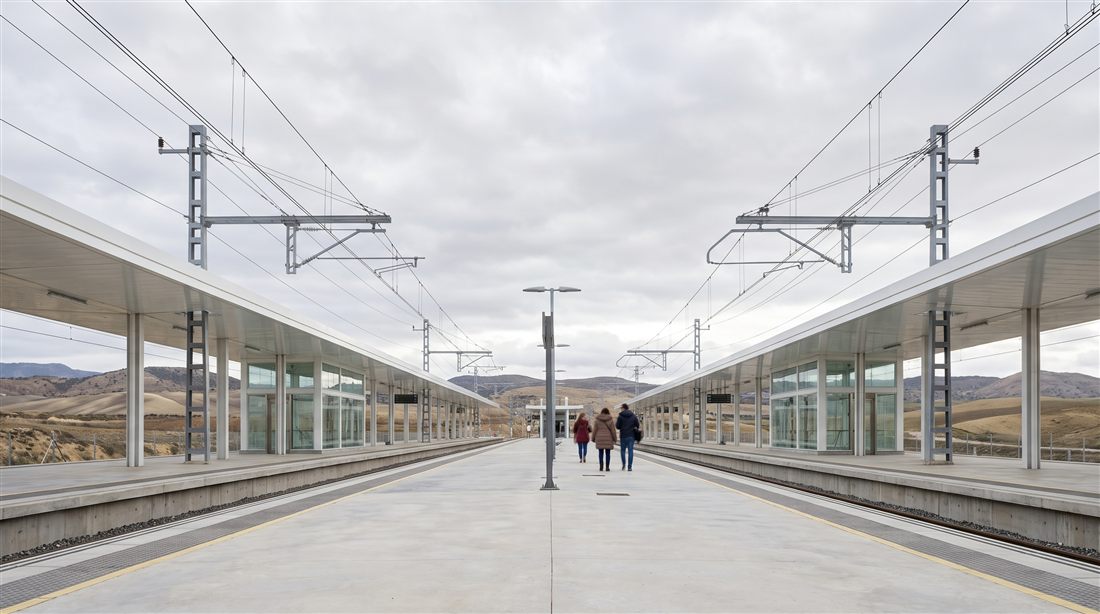
Antequera-Santa Ana
A junction station on the open plain outside Antequera, built for the wider Málaga–Córdoba high-speed network rather than for the town itself. Some Granada–Madrid services call here briefly, and it's a useful interchange toward Málaga's Costa del Sol.
 COSome services
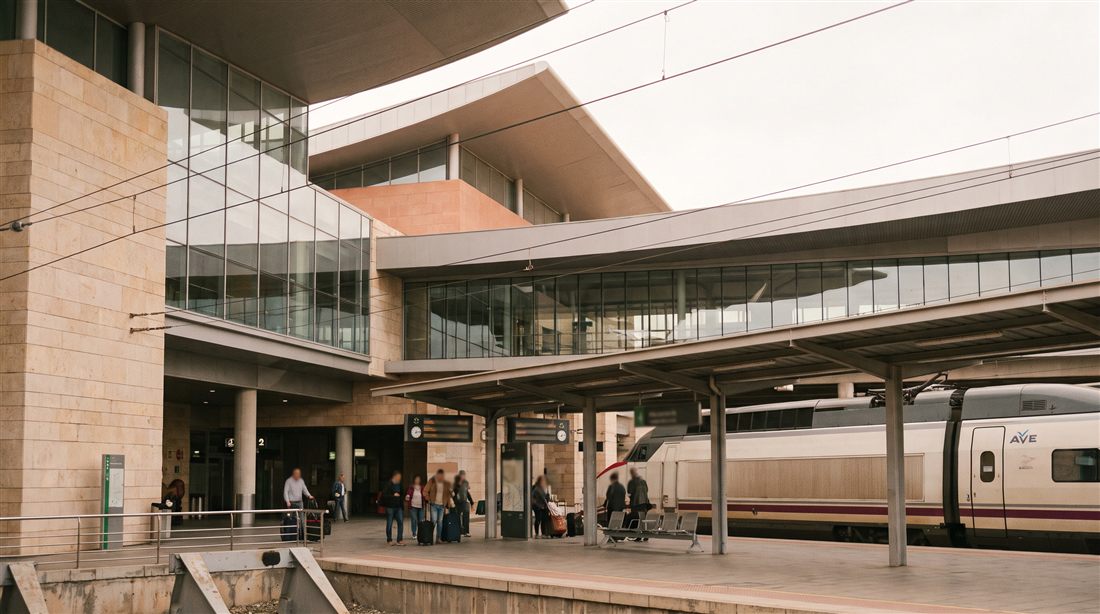
Córdoba
A handful of Granada–Madrid services stop at Córdoba's station, useful if you're breaking the journey to see the Mezquita or connect onward toward Seville — itself a well-connected hub on Spain's high-speed network.
 MAArrival
Madrid Puerta de Atocha–Almudena Grandes
Renamed in 2022 to honor novelist Almudena Grandes, Atocha's original 19th-century train shed was converted decades ago into a lush indoor tropical garden. The modern high-speed platforms sit alongside it, one of the busiest stations anywhere in Spain.
Getting To and From the Stations
Granada Station Access
Granada's station sits about 2 km from the historic centre. Taxis and airport-style transfers wait outside arrivals; city buses and a tram line — the two main public transport options — also connect the station to downtown Granada and the Alhambra hillside, and it's a flat, walkable route if you're travelling light.
Atocha Station Access
Madrid Puerta de Atocha–Almudena Grandes sits right on the Cercanías (commuter rail) and Metro network, with taxis and ride-hailing readily available outside. It's one of the best-connected stations in Spain for public transportation and onward transfers across the city.
The Alhambra and Atocha's Garden
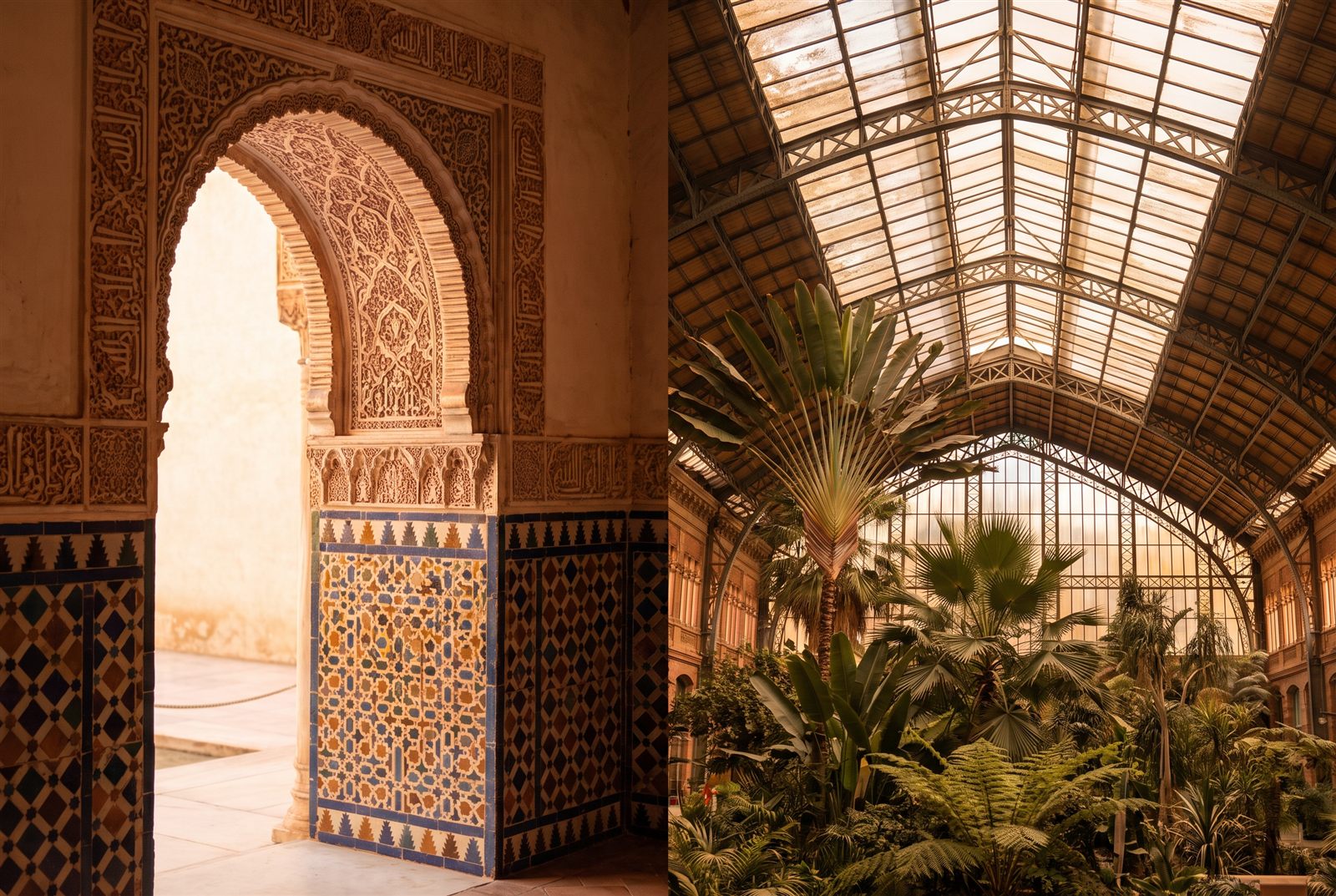
Most people riding this line are bookending a trip with two very different landmarks. In Granada, the Alhambra's Nasrid palaces and gardens sit above the city on their own hilltop — reserve tickets well ahead, since they sell out daily, especially in spring and autumn when the light on the Sierra Nevada behind it is at its best. In Madrid, you don't even need a ticket: Atocha's old train shed shelters a free, humid botanical garden of palms and tropical plants that most travelers walk straight past on the way to their platform, easily worth the five extra minutes it takes to wander through on your way to or from the AVE platforms.
Top Tips for Booking the Madrid to Granada Train
Everything above applies in reverse for the train from Madrid to Granada — same train types, same roughly 3.5-hour direct journey, same Atocha departure point. Whether you need one-way tickets or a return, here are a few practical notes for booking tickets for this journey in either direction:
- Compare specific departures rather than assuming direct always costs more — in one fare snapshot, the cheapest ticket on the route was actually a direct AVE service.
- Book as early as you can either way — aiming for around 56 days ahead is a good target — since fares on this route are yield-managed and climb as a given departure fills up.
- On the Madrid to Granada direction, the first train typically departs Madrid in the early morning (around 6 AM) and the last one leaves in the evening (around 8 PM), bookending a service window similar to the Granada to Madrid side.
- If you want the Sierra Nevada view, sit on the right-hand side heading from Granada to Madrid (left-hand side on the return).
- Arrive with enough buffer for Spanish AVE-style security screening at both Granada and Atocha stations.
- Double-check which Madrid station your ticket uses — nearly all Granada services use Puerta de Atocha–Almudena Grandes, not Chamartín, on the north side of the city.
Other Ways to Travel Between Granada and Madrid
The train is the fastest ground option by a wide margin, but it isn't the only one — here's how the alternatives stack up, for context.
By Train
3h27m–5h26mCity-centre to city-centre, no transfers, no check-in queue — fastest on a direct AVE or Alvia, still competitive even with a connecting Avant leg.
By Plane
~3h with transfersFlights are limited on this short domestic route, and once airport transfers, check-in and security are added, a direct AVE train is usually just as fast — and considerably more comfortable.
By Car
4–4.5 hoursDriving on the A-44 and A-4 motorways, door to door. More flexibility for stops along the way — the La Mancha windmills of Consuegra are a popular detour — but no time saved once city traffic and parking are factored in.
By Bus
5–6 hoursIntercity coach operators cover the same route much slower than the train, but usually the cheapest fixed option, and a reasonable backup if train tickets sell out on a peak date.
Car Rental in Granada and Madrid
If you want a car for exploring beyond the two cities, both Granada and Madrid Puerta de Atocha–Almudena Grandes have car rental desks on site, so you can arrive by train and pick up a car only for the days you actually need one — often cheaper than driving the whole route and parking in either city centre.
Weather and the Best Time to Ride the Granada to Madrid Train
The route crosses two very different climates, and the season changes what you'll see out the window as much as how comfortable the stations feel.
Spring & Autumn
Mild temperatures in Granada and Madrid alike make March–May and September–October the most comfortable months to travel, with the Sierra Nevada often still snow-capped into early spring and the Alhambra's gardens at their greenest.
Summer
Inland Spain runs hot — both cities regularly see 35°C-plus afternoons in July and August. Trains are air-conditioned, but it's a good season to book window seats away from direct afternoon sun, and plan sightseeing for cooler morning and evening hours.
Winter
Snow on the Sierra Nevada peaks makes the Granada departure especially scenic in winter, while Madrid can be cold and occasionally foggy — check for weather-related schedule changes on exceptionally severe days, though disruption on this route is rare.
Granada to Madrid Train FAQ
How long is the train from Granada to Madrid?
The fastest direct services, on AVE or Alvia, cover the roughly 568 km rail route in about 3 hours 27 minutes to 3 hours 48 minutes. Itineraries with one change, often routed via a connecting Avant service, can take up to around 5 hours 30 minutes.
How much does a Granada to Madrid train ticket cost?
Fares vary widely by specific departure and how far ahead you book, from around $76 up to around $211 for the same one-way journey. Price doesn't always track with journey time — in one fare snapshot the cheapest ticket was on a direct AVE service, so it's worth comparing specific departures rather than assuming a change is cheaper.
How many trains run between Granada and Madrid each day?
Renfe typically runs around 6 to 8 departures a day between Granada and Madrid, roughly half of them direct on AVE or Alvia and the rest routed via a single change, often on a connecting Avant service. Exact schedules shift by day and season, so it's worth checking current timetables before you travel.
Which train operators run between Granada and Madrid?
The Granada–Madrid line is run entirely by Renfe, Spain's national rail operator, using three train types: AVE, the fastest and most frequent; Alvia, also direct and broadly similar in comfort; and Avant, typically used on itineraries that include one change.
Which Madrid station do Granada trains arrive at?
Trains arrive at and depart from Madrid Puerta de Atocha–Almudena Grandes, renamed in 2022 to honor the Spanish novelist. The station's original 19th-century train shed now houses a large tropical garden.
Is there a direct train from Granada to Madrid?
Yes. AVE and Alvia services run direct, sometimes with a brief call at Antequera-Santa Ana and/or Córdoba, in roughly 3.5 hours. Some other departures route via a single change onto a connecting Avant service instead.
When did Granada get high-speed AVE service?
Granada was the last major Andalusian capital connected to Spain's high-speed network. The 122 km Antequera–Granada spur opened to passengers on 26 June 2019, finally linking Granada station directly into the AVE system via the Córdoba–Málaga high-speed line.
Can I bring luggage on the Granada to Madrid train?
Yes. Standard checked and carry-on luggage is included with most AVE and Alvia fares. If your itinerary includes a change onto a connecting Avant service, double-check the baggage allowance for that leg when booking.
Can I bring a pet or a bike on the Granada to Madrid train?
Small pets in an approved carrier are generally allowed in the cabin for a small supplement, and folded bikes are usually accepted as standard luggage. Policies vary slightly by train type, so check the fare conditions for pets and bikes before booking.
Is there food and coffee on the Granada to Madrid train?
AVE and Alvia typically have a café car or trolley service with coffee, snacks and sandwiches, and higher classes can include at-seat food and drinks. Onboard service on a connecting Avant leg is simpler, so it's worth checking what's included for that specific train when booking.
What's the cheapest way to book a Granada to Madrid train ticket?
Booking as early as possible and comparing specific departure times generally finds the lowest fares — pricing on this route is yield-managed and can vary a lot even between similar direct AVE departures on the same day, not just between direct and connecting itineraries.
Is the train better than flying or the bus from Granada to Madrid?
For most travellers, yes. The train beats the bus on time by 2 hours or more, and it's usually just as fast as flying once airport transfers and check-in are counted — with a far more comfortable, city-centre-to-city-centre ride.
How much is a taxi from Atocha or Granada station to the city centre?
A taxi from Madrid Puerta de Atocha–Almudena Grandes into central Madrid typically runs a short, metered fare of a few euros for a few minutes' drive; Granada station to the historic centre is a similarly short, inexpensive ride, and both stations also have onward bus, tram or metro links.
What's included in Standard Class on the Granada to Madrid train?
AVE's Turista fare is the standard class (also sold as economy class) and still includes a reclining seat, a fold-down table, power sockets, and — on many trains — free wifi and an onboard entertainment portal, giving solid value without paying for Preferente's premium fare and highest-quality service.
Is the Granada to Madrid Train Worth It?
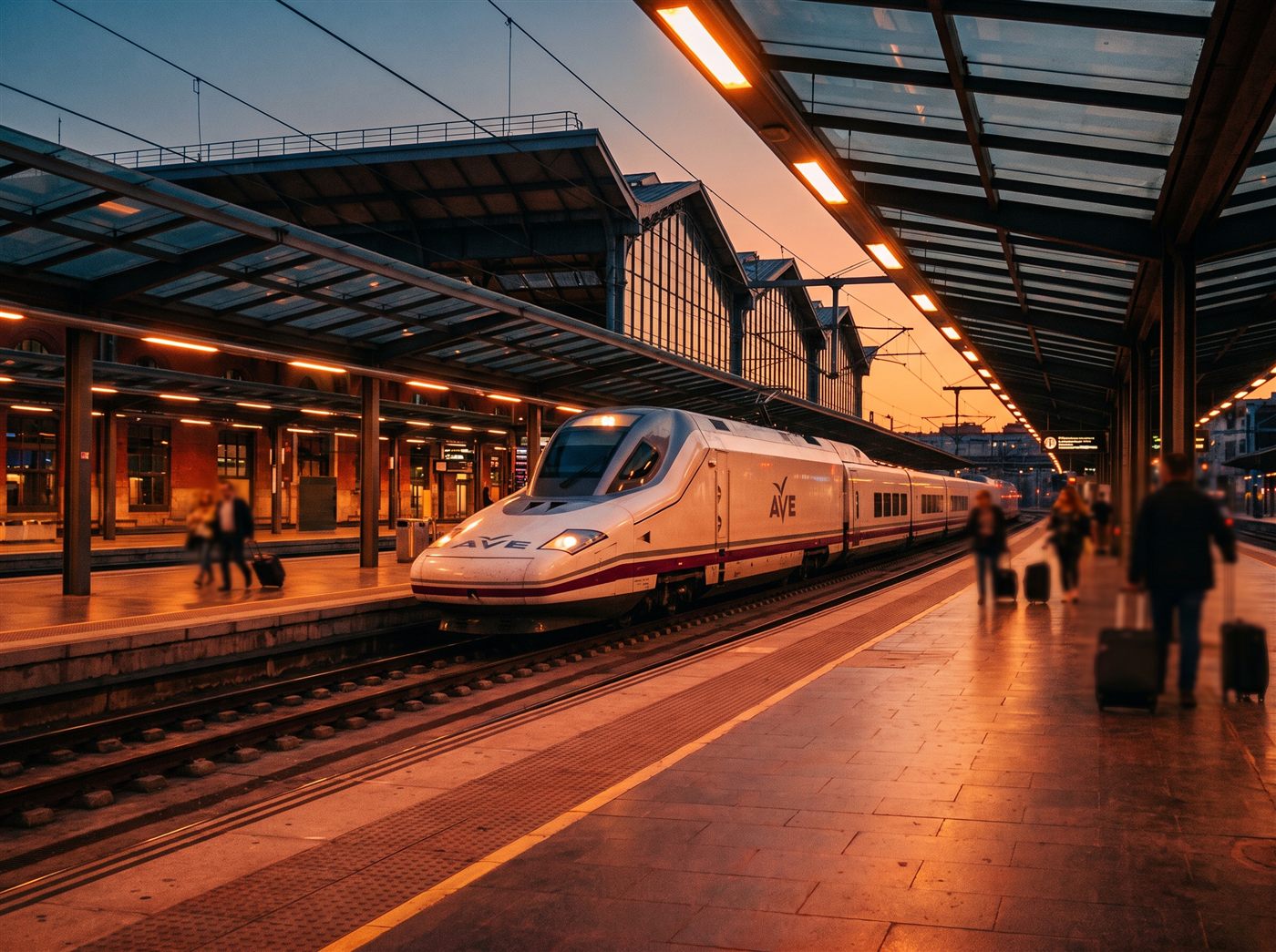
For a roughly 3.5-hour direct journey city-centre to city-centre, with Sierra Nevada views on departure and a genuinely pleasant arrival under Atocha's botanical garden, the train is the easy choice over the bus, car or a flight on this route. AVE and Alvia offer the fastest, most frequent direct service; a connecting Avant itinerary can fill a schedule gap but isn't reliably cheaper, so it's worth comparing live prices rather than assuming. Whichever train fits your trip, the underlying journey is the same well-built, scenic high-speed line that took Spain decades to finish — you can compare live times and fares below.
Ready to book your Granada–Madrid train?
Compare AVE, Alvia and Avant fares side by side and lock in your seat before prices rise.